
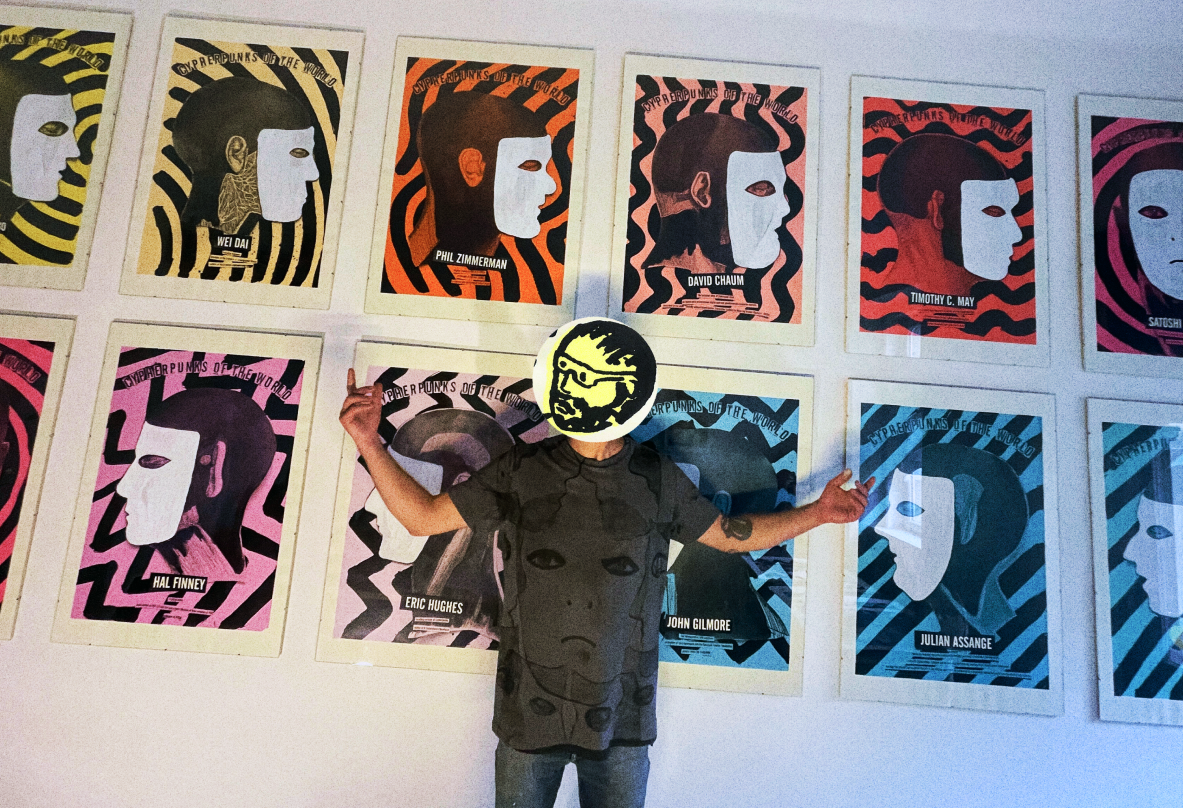
A ten-year retrospective in print and crypto iconography
In a landscape where art and technology constantly push against each other, few creators channel the raw charge of crypto culture like Czech artist, Martin Fischer, known widely as CypherpunkNow. His practice sits at the meeting point of analog resistance and digital velocity. Rather than illustrating the Bitcoin era from a distance, he forges its visual memory piece by piece.
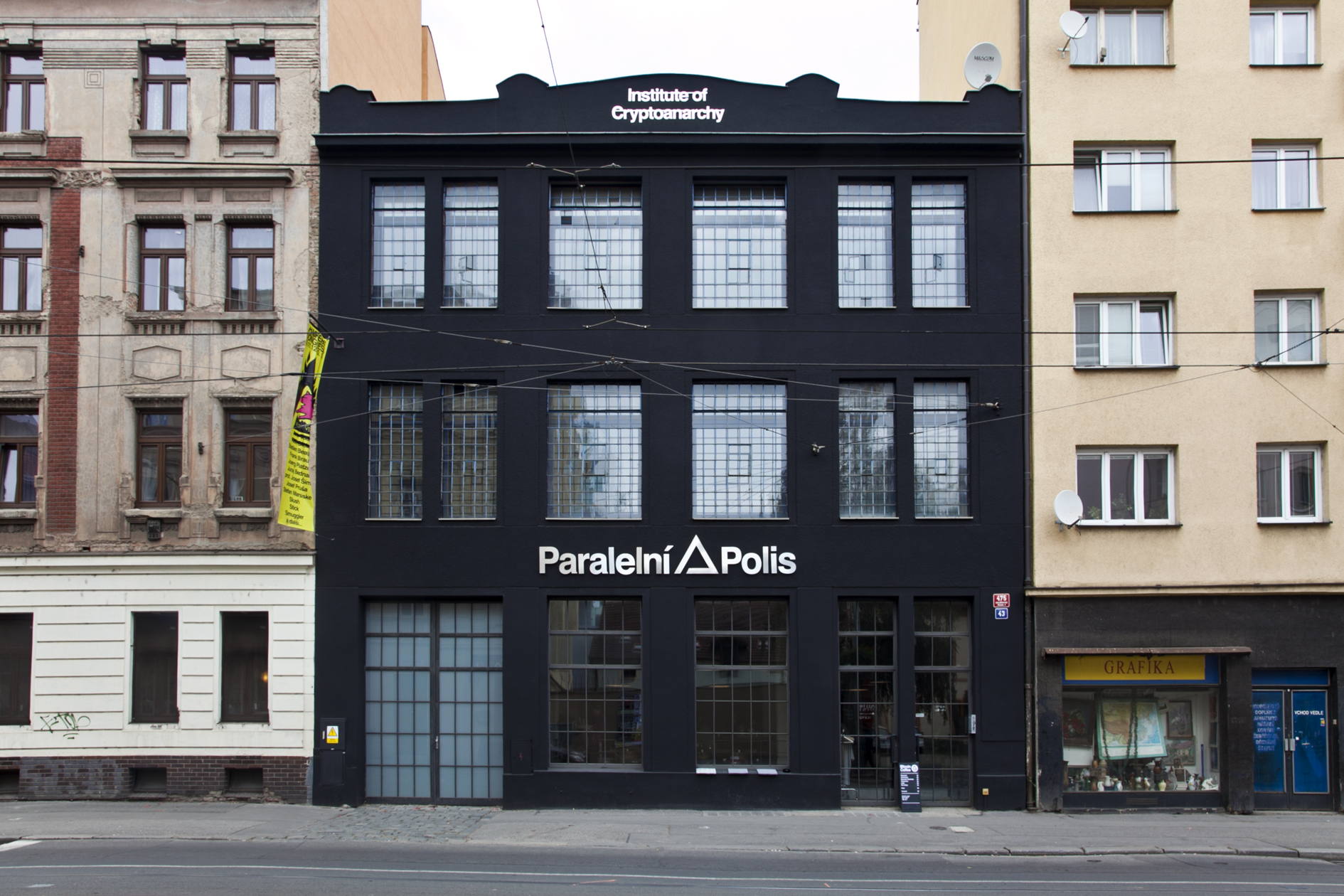
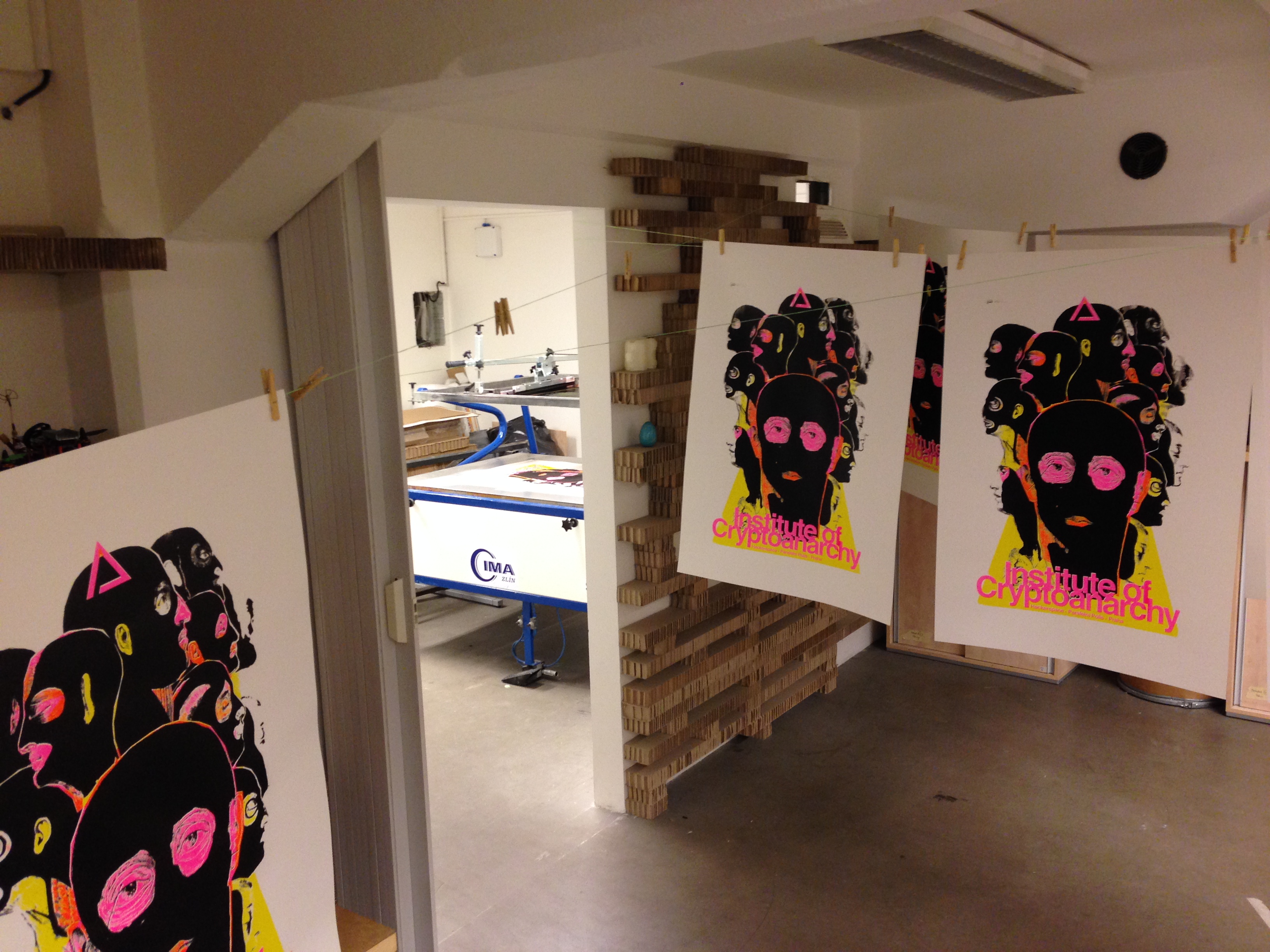
His story begins in 2014, when he co-founded Paralelní Polis, a three-story hackerspace built on a Bitcoin-only economy and the principles of crypto-anarchy. That’s where his first screenprinting table stood, inside a chaotic environment where a café, coworking hub and the Institute of Cryptoanarchy operated side by side.
In 2015, within this space, he began producing the earliest surviving works of this retrospective, signed “Mfish,” the nickname he initially used within the Ztohoven collective during the founding of Paralelní Polis. As the technical demands of screenprinting grew, he moved his process into an independent studio. Between 2015 and 2020, he signed his work “Fischer,” marking a period defined by experimentation, evolving craftsmanship and his first attempts to visually interpret the emerging cultural and ideological landscape around Bitcoin.
In 2020, he adopted his signature name “CypherpunkNow,” signaling the beginning of the visual mythology that now defines his practice, a synthesis of vintage engravings, digital elements, Bitcoin symbolism and the ethos of cypherpunk culture.
His work carries the weight of hand-pulled screenprints and the precision of early NFT experimentation, fusing antique engravings with pixel logic to create imagery that feels archival and insurgent at once.
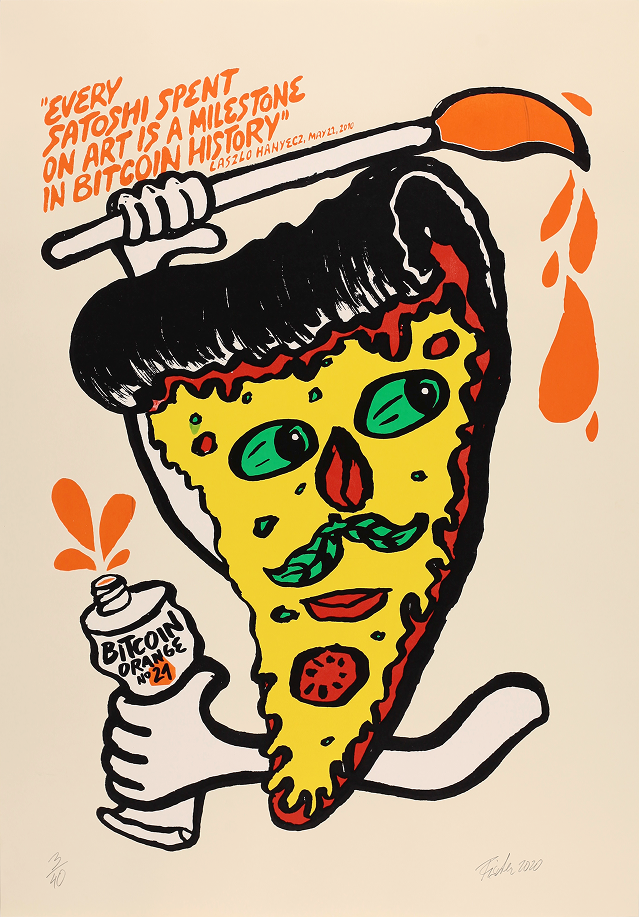
Collectors on our marketplace have already moved quickly on his prints, drawn to images that anchor themselves in Bitcoin’s history.
CypherpunkNow's long-standing use of our blockchain certificates adds another layer to that connection. Our certificates are all recorded on the Bitcoin blockchain through OpenTimestamps, creating a provenance trail that mirrors the very network his work pays homage to. The result is a loop that ties process, subject and certification back into the same ecosystem.
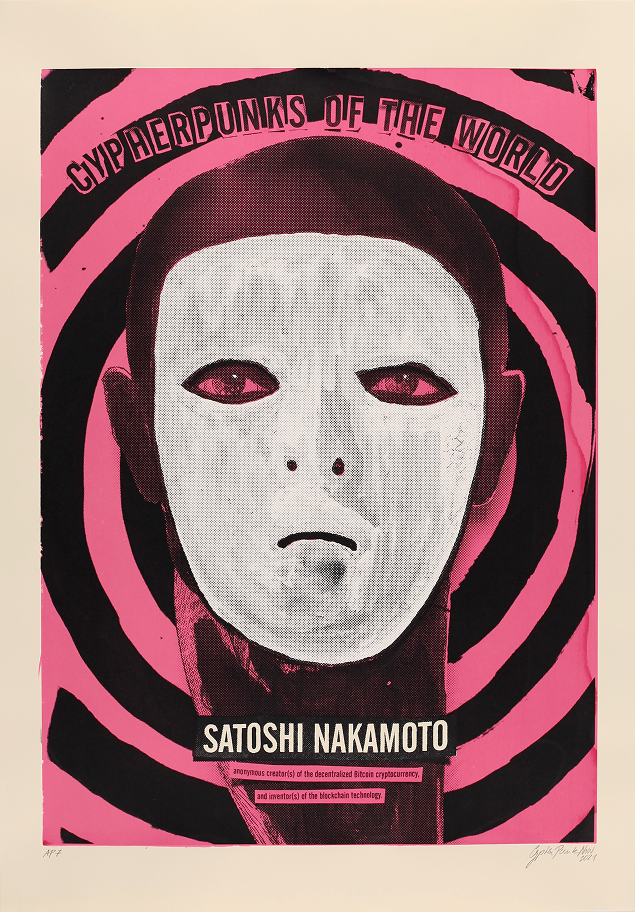
Now we’re partnering with CypherpunkNow on a curated set of works for his “CypherpunkNow — The First Decade (2015–2025)” a retrospective spanning ten years of the artist’s practice, each print(s) aligned with a specific moment on the Bitcoin timeline. For a limited time, a single collector can acquire the full set at a fixed price of $10,000, reduced from its total value of $12,658. The number is deliberate: 21 percent, a nod to Bitcoin’s fixed supply of 21 million.
This is not a curated selection of ‘best works’, but the only possible sequence that remained—shaped by what survived, what sold out, and what time allowed.
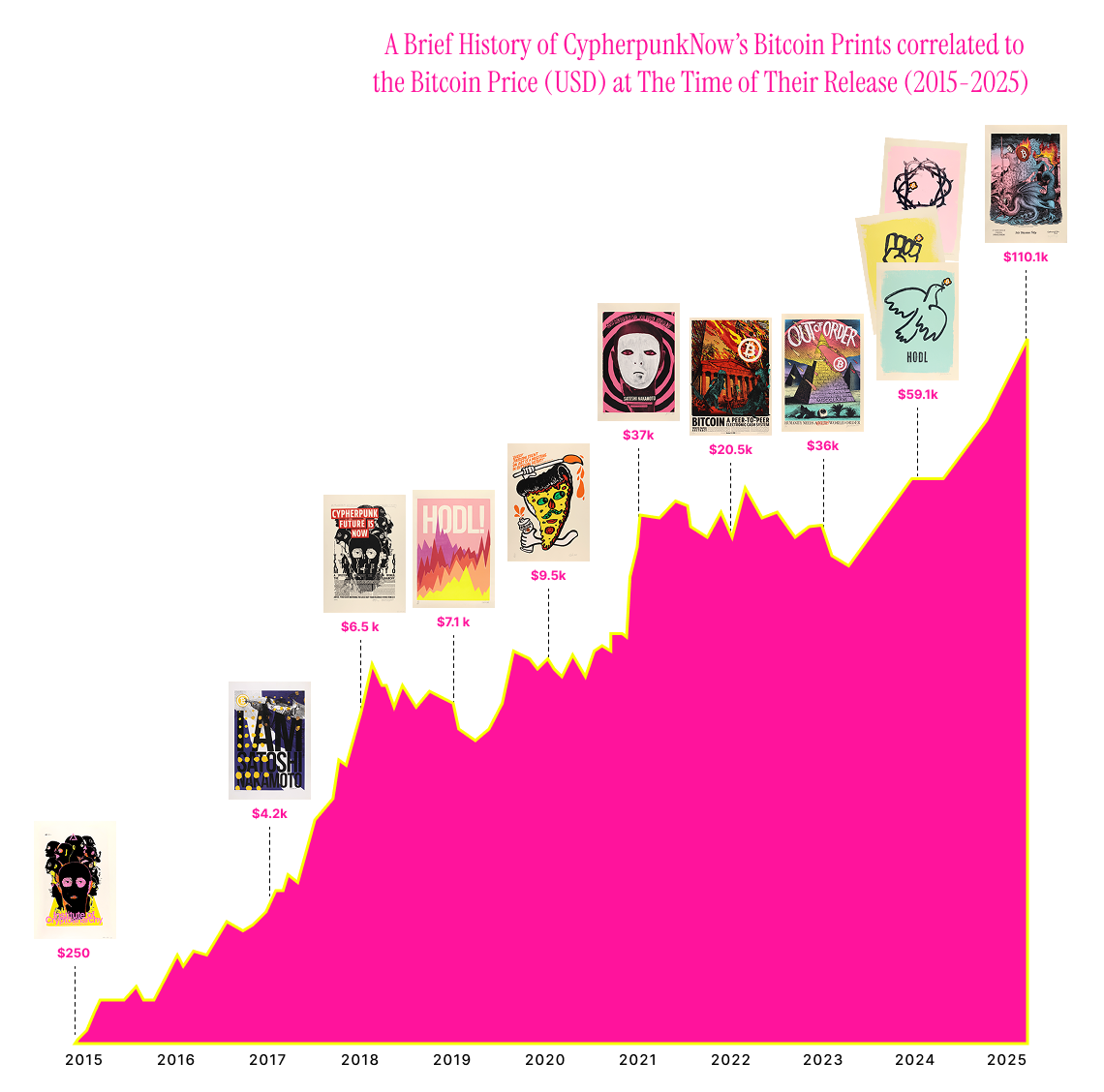
We sat down with the artist to talk about the visual language of Bitcoin that he has helped shape, from co-founding a hackerspace to building a body of work that has become closely tied to the culture, here’s what he’s had to say:
When did Bitcoin shift from something you were observing to something you felt responsible to represent visually?
That shift happened around 2014–2015, when I co-founded Paralelní Polis.Suddenly I wasn’t just observing Bitcoin from the outside — I was immersed in a Bitcoin-only environment, surrounded by people who were genuinely reorganizing their lives, values, and economic relationships around it.It didn’t spark ambition as much as a sense of responsibility. I felt that something historically important was happening, and that it needed to be documented visually. At the time, most of my non-Bitcoin surroundings didn’t understand it, and I wasn’t confident enough to present the work publicly. Many of my first prints were created quietly, almost “for the drawer,” without any expectation of an audience.It took me several more years to fully trust that I could carry this work on my own.
.png)
What part of Bitcoin’s early culture first sparked the imagery you’re now known for?
Reading The Crypto Anarchist Manifesto by T.C. May was my first true “wow” moment. I remember thinking: this is a powerful text, but it has no image. Then there was the myth of Satoshi Nakamoto — anonymous, absent, yet profoundly present. That combination of radical ideas and missing visual language became a foundation for my work. It felt like an open invitation to translate those ideas into images, symbols, and narratives that could exist beyond text.
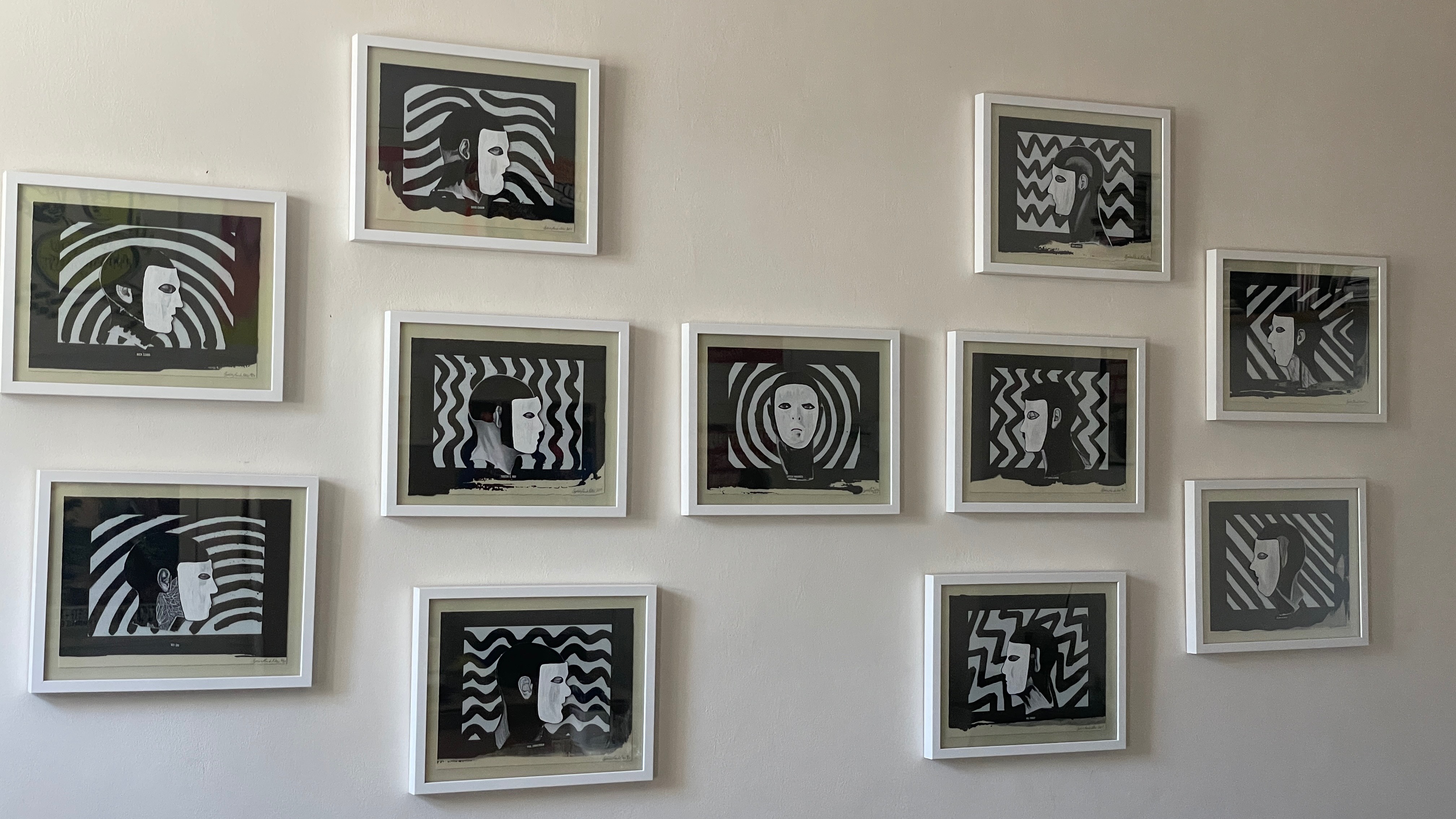
How has your background in analog techniques like screenprinting influenced your approach to depicting digital concepts such as Bitcoin and cypherpunk ideals?
From the beginning, the combination of analog printing and digital ideas felt natural to me. At the time, most Bitcoin imagery leaned toward clean, rendered digital visuals — technically impressive, but often emotionally flat. What was missing was gesture, imperfection, and the human hand.
Screenprinting introduced friction, texture, and physical presence. It allowed digital concepts like Bitcoin and cypherpunk ideals to exist in the real world as objects — imperfect, layered, and irreversible. That contrast is central to my work: digital ideas translated through analog resistance.
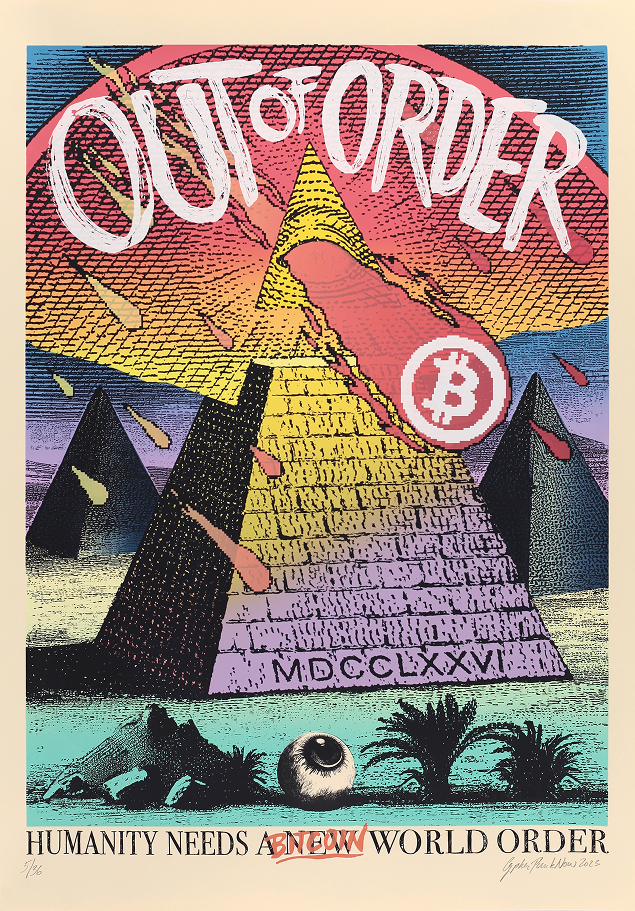
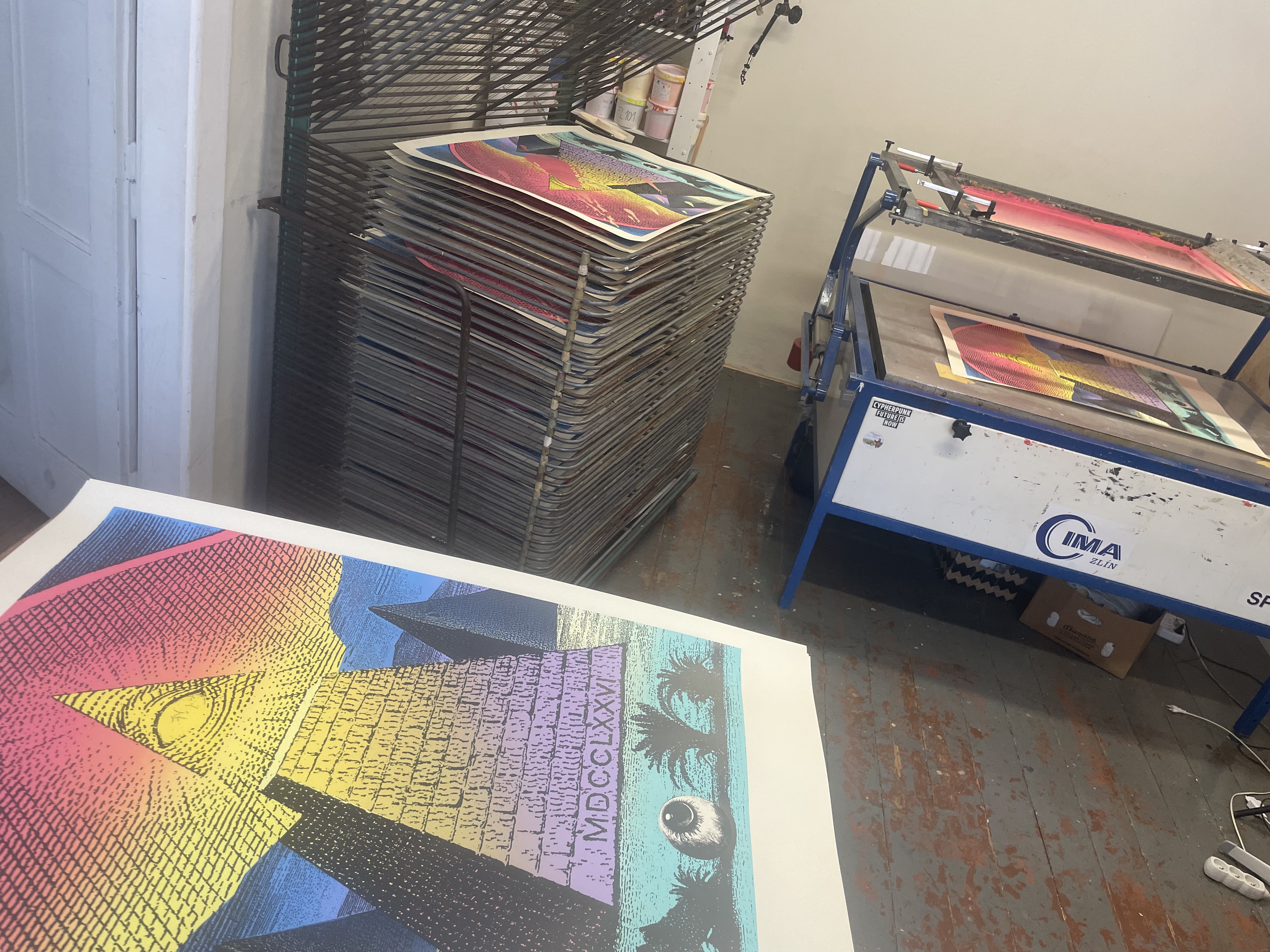
What part of your screenprinting workflow do most people underestimate?
Most people underestimate how physical and irreversible the process is. Once a layer is printed, there is no undo — mistakes become part of the object or the print is destroyed.
Interestingly, most collectors don’t need to know the details of the process. They simply feel the difference compared to digital prints. For me, the workflow itself is essential: mixing inks, exposing screens, printing color by color. I taught myself everything through trial and error, without formal guidance. After ten years, the process has become second nature — and I genuinely enjoy every step of it.
Screenprinting is slow, physical and bound to real-world constraint. Do you see parallels between that craft and Bitcoin’s emphasis on proof, difficulty and verification?
Absolutely.
Screenprinting and Bitcoin both rely on proof of work, each in a different universe.
Both require time, effort, and an acceptance of constraints. Nothing is instant, nothing is free, and shortcuts are visible. If my work were printed digitally, I couldn’t honestly draw that parallel — the physical labor is what gives the comparison meaning.
Are there Bitcoin symbols or motifs you deliberately avoid because they don’t align with how you see the protocol?
I don’t consciously avoid specific symbols or imagery.
However, I have drawn a clear boundary when it comes to how the Bitcoin protocol itself is used.
Having followed the NFT space since 2019, I was always interested in Bitcoin-native experiments. But when Ordinals emerged, I realized I didn’t want to participate in what I personally perceive as unnecessary blockchain saturation. That realization surprised me, but it helped clarify my position. For me, Bitcoin’s value lies primarily in freedom, resilience, and sovereignty — not in its capacity to store images.
I did create a single Ordinal as a conceptual meme-statement, titled “JPG Is Not Bitcoin”
(https://ordinals.com/inscription/59450319). It’s listed for 1 BTC, fully aware of its own limitations and its near-invisibility on marketplaces, where single, non-liquid works at that price tend to disappear from the interface. The piece openly questions its own value rather than asserting it.
So rather than avoiding themes, I avoid practices that conflict with my understanding of Bitcoin’s purpose.
In your view, how has the visual identity of Bitcoin evolved over the past decade, and what gaps have you aimed to fill through your work?
In 2017, when I first exhibited at the Hackers Congress at Paralelní Polis, I genuinely thought I might be the only artist working with Bitcoin as a subject. Then I discovered artists like Lucho Poletti and Brekkie von Bitcoin, who later became friends — and suddenly there were many more.
What I find most beautiful is that Bitcoin has no CEO — and therefore no centralized visual identity. Its imagery is created independently by artists all over the world, each approaching it from a different angle. Today, it feels natural for Bitcoin conferences to include galleries, which would have been unthinkable years ago. My work aims to contribute to that decentralized visual culture, not define it.

Your signature changed from “Fischer” to “CypherpunkNow” around 2020. For collectors looking at this drop, how should they read that shift across all prints — is it a clean break, or more of a gradual metamorphosis?
In reality, my signature changed three times: from Mfish, to Fischer, and finally to CypherpunkNow. This wasn’t a strategic branding decision — it reflects a gradual personal and artistic transformation.
“Mfish” belonged to a collective, experimental period. “Fischer” marked a phase of technical focus and professional growth. “CypherpunkNow” represents a conscious commitment to visualizing Bitcoin and cypherpunk mythology as a long-term artistic mission. It wasn’t a clean break, but a natural metamorphosis.
This drop features prints from your “first decade” archive, each aligned with Bitcoin’s historical timeline and price fluctuations—how did you select which works best captured those pivotal moments?
Honestly, my options were limited. Many works are completely sold out.
I went deep into my archive and discovered that a few prints had survived almost by accident — not because I saved them for this moment, but simply because they hadn’t sold at the time.
Especially the earliest 2015 print was never intended for sale. The fact that I was able to assemble one print for each of the ten years feels less like planning and more like an unexpected gift.
This collection ties one print to each year of your practice. Do you see a clear evolution in the work, or does it feel more like a loop?
Conceptually, it’s a loop — certain themes return again and again.
But technically and mentally, it’s an evolution. Each return comes with more clarity, confidence, and precision. The symbols repeat, but the understanding behind them deepens.
Learn more about the artist by viewing his website, Instagram and X.

We’ve been using Verisart for several years and love the additional layer of trust it provides our collectors.


